
In today’s hyper-competitive online marketplace, simply having an ecommerce store isn’t enough. Engaging customers through personalized, timely, and relevant communication is critical. That’s where ecommerce email marketing software comes in. From abandoned cart recovery to tailored product recommendations, these tools allow online stores to drive sales, boost retention, and enhance customer lifetime value. This guide dives deep into the best platforms, practical strategies, and expert insights to help your store thrive in 2026 and beyond.
What is Ecommerce Email Marketing Software?
Ecommerce email marketing software is a specialized platform designed to automate, personalize, and track email campaigns for online stores. Unlike generic email marketing tools, ecommerce-specific solutions connect directly with online store data, offering features like:
- Automated abandoned cart emails
- Dynamic product recommendations
- Customer segmentation by purchase behavior
- Lifecycle marketing campaigns (welcome series, post-purchase follow-ups)
For example, a customer browsing running shoes can automatically receive a personalized email featuring related products, reviews, or a discount all without manual intervention
Why Ecommerce Email Marketing Matters
Email marketing remains one of the most effective channels for ecommerce. A well-executed strategy can generate $36 ROI for every $1 spent, according to industry reports. Key benefits include:
- Higher Engagement: Personalized campaigns achieve higher open and click-through rates than generic emails.
- Revenue Recovery: Abandoned cart emails recover up to 30% of lost sales.
- Customer Retention: Regular, relevant emails nurture loyalty and repeat purchases.
- Data-Driven Insights: Campaign analytics inform future marketing strategies.
Mini Case Study: A mid-sized Shopify store implemented abandoned cart workflows via Klaviyo. Within 60 days, their recovered revenue rose by 25%, and repeat purchase rates increased by 15%.
Key Components of Ecommerce Email Marketing Software
A robust ecommerce email marketing platform typically includes:
1. Automation & Workflows
Automated email sequences reduce manual effort while maintaining relevance. Examples include:
- Welcome Series: Onboarding new subscribers with brand introduction and product highlights.
- Abandoned Cart Emails: Triggered 1–24 hours after a cart is abandoned.
- Re-engagement Campaigns: Win back inactive customers with tailored offers.
Tip: Use multiple touchpoints in your workflow (e.g., initial reminder, discount offer, last-chance message) to maximize conversions.
2. Segmentation & Personalization
Segmenting your audience ensures the right message reaches the right customer. Segmentation criteria can include:
- Purchase frequency (loyal vs. occasional buyers)
- Browsing behavior (products viewed but not purchased)
- Geographic location or timezone
- Customer lifetime value (CLV)
Example: Segmenting high-value customers and offering VIP early access to new products can increase engagement by over 40%.
3. Analytics & Reporting
Measure campaign effectiveness with key metrics:
- Open rate, click-through rate, conversion rate
- Revenue per email and per subscriber
- Engagement over time (seasonal trends)
These insights help optimize subject lines, send times, and content for maximum ROI.
4. Integration & Ecommerce Compatibility
Top platforms integrate with:
- Shopify, WooCommerce, BigCommerce, Magento
- Payment gateways like Stripe or PayPal
- CRM and other marketing tools
Practical tip: Ensure real-time synchronization so your emails reflect accurate inventory, pricing, and promotions.
5. Template & Design Tools
Most ecommerce email platforms offer drag-and-drop editors and prebuilt templates for:
- Promotional emails
- Transactional emails (order confirmations, shipping notifications)
- Lifecycle campaigns
Benefits of Using Ecommerce Email Marketing Software
| Benefit | Description | Practical Example |
| Increased Conversions | Personalized campaigns encourage purchases | Abandoned cart email with a 10% discount recovers lost sales |
| Customer Retention | Nurture loyal customers | Send personalized product recommendations to repeat buyers |
| Time Efficiency | Automate repetitive campaigns | Schedule welcome series for new subscribers |
| Data Insights | Track and optimize campaigns | Identify which products drive the most clicks and adjust inventory marketing |
Pro Tip: Combining analytics with personalization ensures your emails are both effective and efficient.
Common Challenges and Limitations
While powerful, these tools can face obstacles:
- Deliverability issues: Emails may land in spam if content is poorly optimized.
- Complex setup: Integration with multiple systems can be technical.
- Over-reliance on automation: Automated campaigns can feel robotic if not personalized.
- Compliance risks: GDPR, CCPA, and other privacy regulations must be respected.
Tip: Always segment your audience and run small test campaigns to monitor engagement before scaling.
Best Practices for Ecommerce Email Marketing
- Segment Your Audience: Tailor campaigns by behavior, demographics, or purchase history.
- Use Behavioral Triggers: Automate abandoned cart emails, product recommendations, and re-engagement campaigns.
- Optimize Subject Lines: Keep them short, clear, and curiosity-driven.
- Test & Analyze: A/B test content, timing, and CTAs to find optimal strategies.
- Leverage Dynamic Content: Display different products or offers based on subscriber behavior.
- Maintain Consistent Branding: Keep email visuals, tone, and style aligned with your website.
Common Mistakes to Avoid
- Sending too many emails → leads to unsubscribes
- Ignoring mobile optimization → over 50% of emails are opened on mobile
- Generic messaging instead of segmentation
- Neglecting email list hygiene → remove inactive subscribers regularly
Quick Tip: Use a double-opt-in process to ensure your list contains engaged subscribers.
Step-by-Step Framework for Ecommerce Email Campaigns
- Define Goal: Identify if the campaign aims to convert, retain, or re-engage.
- Segment Audience: Group by purchase behavior or engagement.
- Create Content: Craft subject lines, body copy, images, and CTA.
- Set Triggers: Automate based on user behavior or time schedules.
- Test Campaign: Send to a small segment and analyze performance.
- Launch & Monitor: Roll out to the full audience and track metrics.
- Optimize: Adjust copy, timing, and segmentation based on results.
Example: A beauty ecommerce store could trigger a post-purchase email with tutorial videos and recommended complementary products.
System.io: The Ultimate 2026 for email marketing software
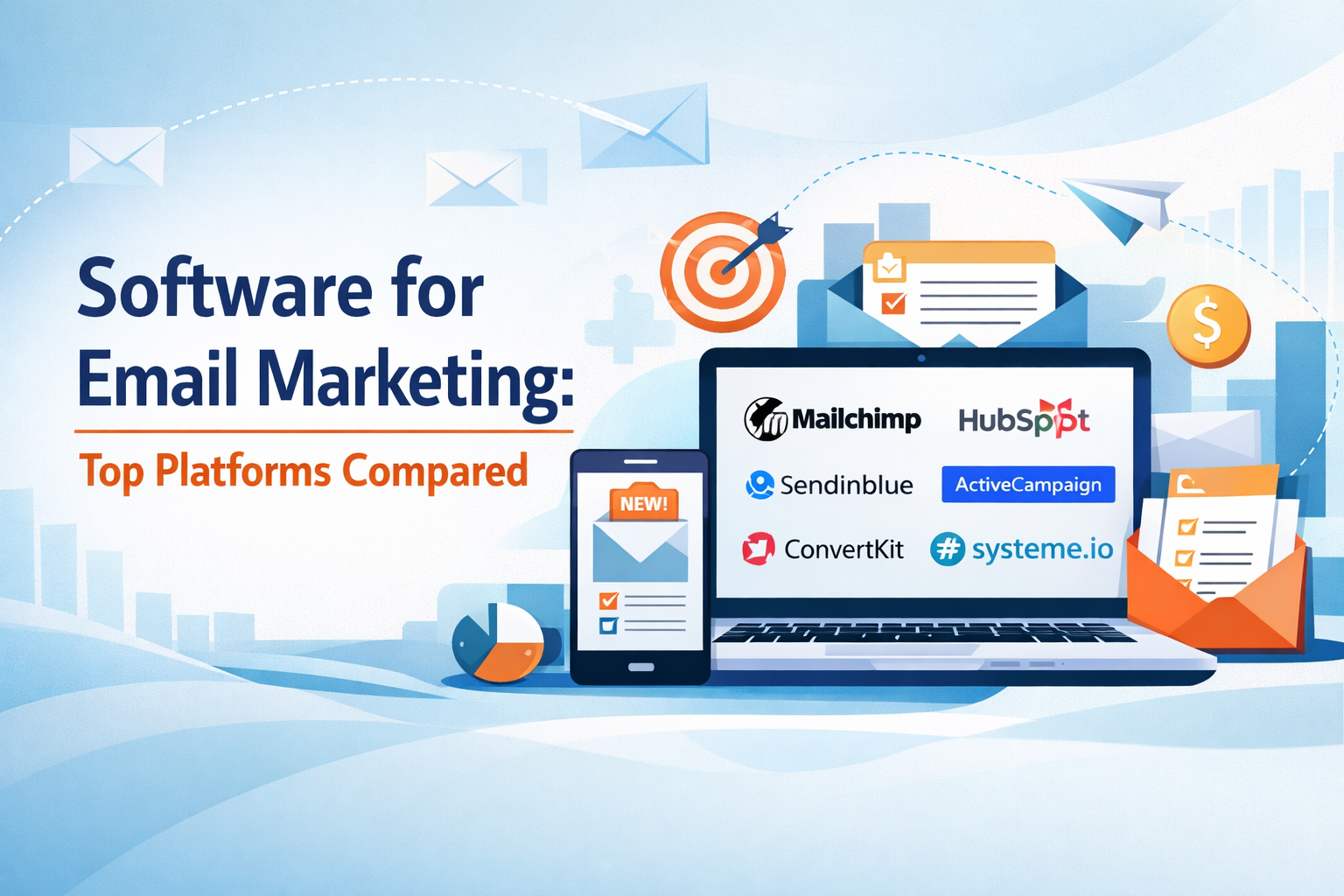
Top Ecommerce Email Marketing Tools Compared
| Software | Best For | Key Features | Pricing (Starting) |
| Klaviyo | Advanced automation | Predictive analytics, abandoned cart recovery, segmentation | $20/month |
| Omnisend | Omnichannel campaigns | SMS + email, prebuilt workflows, drag-and-drop editor | $16/month |
| Mailchimp | Beginners & SMBs | Templates, CRM integration, reporting | $13/month |
| ActiveCampaign | Personalized campaigns | Automation, CRM, lead scoring, SMS | $29/month |
| System.io | All-in-one marketing | Funnels, email, membership sites, automation | $27/month |
My Recommendation
For ecommerce businesses looking for robust automation and detailed analytics, Klaviyo is a top choice. Omnisend suits those who want omnichannel marketing, integrating SMS and email.
System.io, however, is ideal for small businesses and entrepreneurs seeking an all-in-one platform. It provides:
- Email marketing automation tailored for ecommerce
- Integrated sales funnels to boost conversions
- Membership site and course support
- User-friendly setup with powerful automation features
Practical Use Case:
A Shopify store using System.io can:
- Trigger abandoned cart emails with a 10% discount after 1 hour.
- Send personalized product recommendations 48 hours later.
- Track revenue and engagement from a single dashboard.
This workflow automates customer engagement while driving measurable revenue.
Advanced Strategies to Maximize ROI
- AI-Powered Recommendations: Platforms like Klaviyo now use AI to predict the next product a customer is likely to buy.
- Interactive Emails: Add polls, GIFs, or mini product carousels to engage readers.
- Dynamic Send Time Optimization: Send emails when each subscriber is most likely to open.
- Integrate SMS and Push: Combine email with SMS for higher conversion rates.
- Customer Loyalty Campaigns: Reward repeat buyers with exclusive offers or VIP early access.
Future Trends in Ecommerce Email Marketing
- AI-Driven Personalization: Predictive algorithms for products, content, and timing.
- Privacy-Focused Marketing: Balancing personalization with GDPR and CCPA compliance.
- Omnichannel Integration: Email, SMS, push notifications, and social messaging synced for consistent engagement.
- Enhanced Interactivity: Direct purchases from within the email without visiting the website.
Staying ahead of these trends ensures sustained engagement and competitive advantage.
FAQ
Q1: What is the best ecommerce email marketing software?
Depends on business size and goals. Klaviyo is excellent for automation and segmentation, System.io is perfect for all-in-one solutions.
Q2: How much does ecommerce email marketing software cost?
$10–$50/month for small businesses; enterprise solutions may cost $200+/month.
Q3: Can small ecommerce stores benefit from automation?
Yes. Even simple automated workflows like abandoned cart recovery boost conversions.
Q4: What are abandoned cart emails?
Emails sent to users who added items to their cart but didn’t complete checkout.
Q5: How is ROI measured for email campaigns?
Open rates, click-through rates, conversions, and revenue per subscriber.
Q6: Is personalization important?
Yes. Personalized subject lines and product recommendations increase engagement significantly.
Q7: Can email software integrate with Shopify or WooCommerce?
Yes. Top platforms like Klaviyo, Omnisend, and System.io integrate seamlessly.
Q8: Are there privacy concerns with email marketing?
Yes. GDPR and CCPA compliance is essential. Always secure consent and manage customer data responsibly.