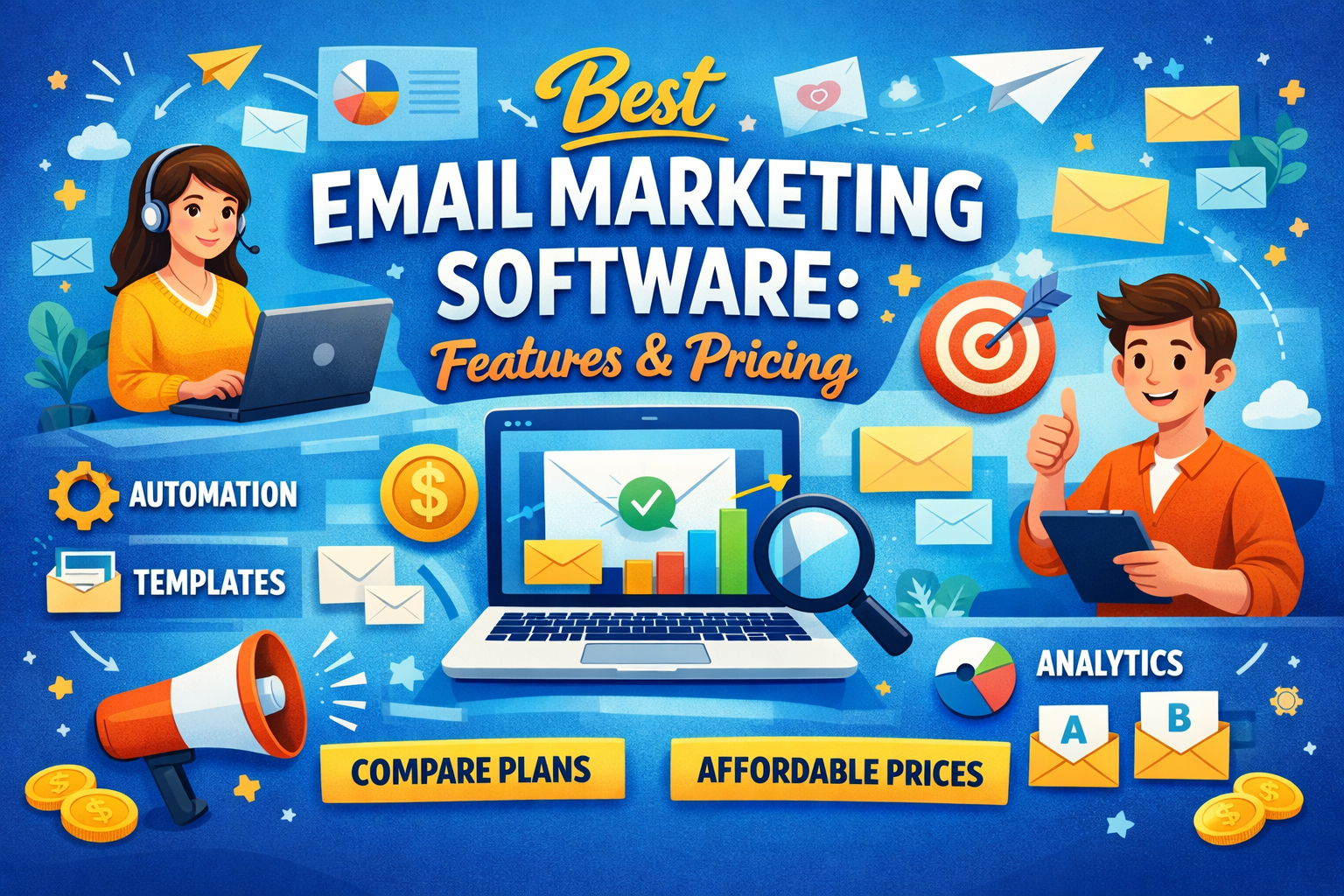
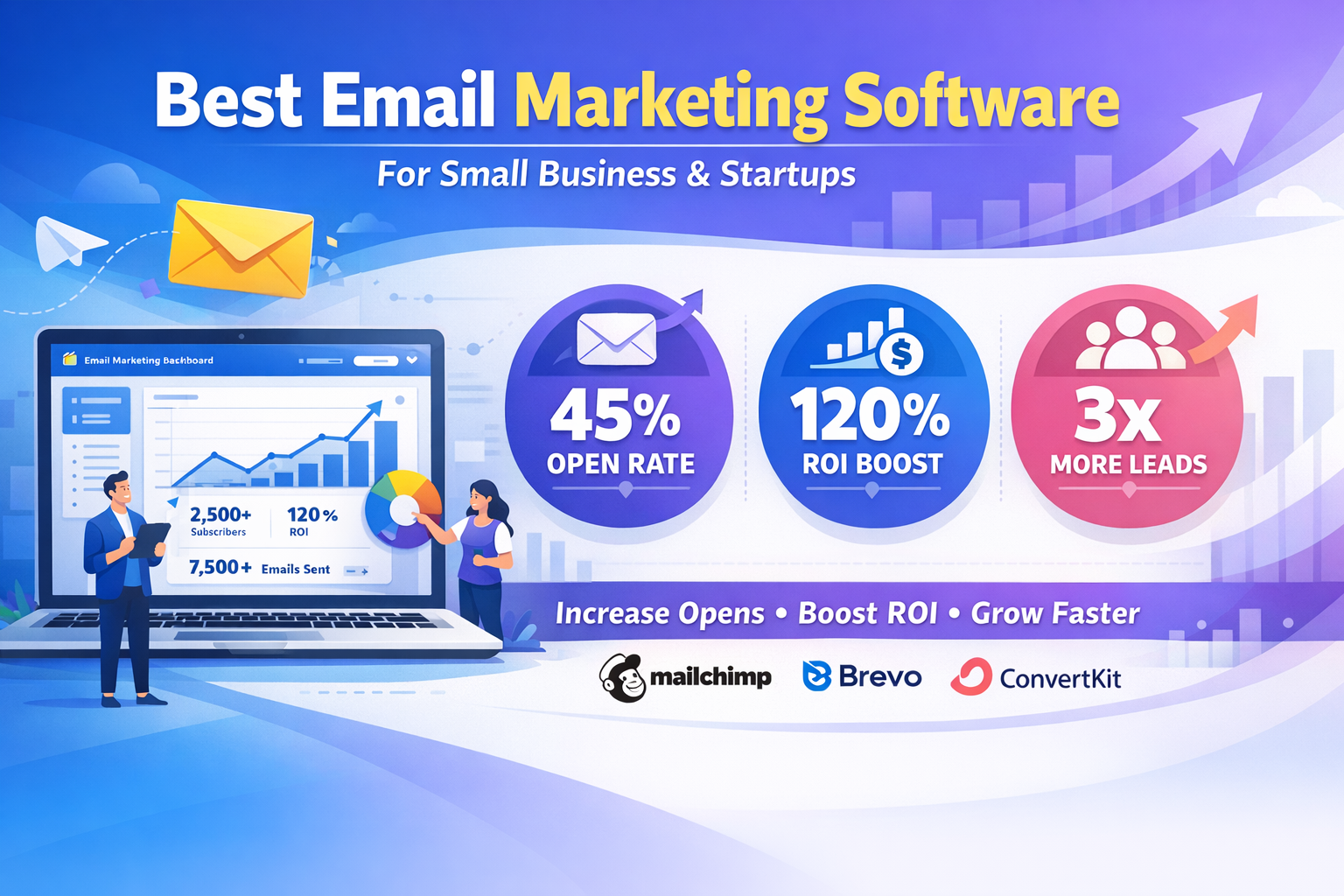
Email remains the highest-ROI digital marketing channel for small businesses and startups. However, choosing the best email marketing software is no longer just about sending newsletters. It is about automation, segmentation, personalization, deliverability, CRM integration, and scalable growth systems.
What Is Email Marketing Software?
Email marketing software is a digital platform that allows businesses to:
- Build and manage email lists
- Create newsletters and promotional campaigns
- Automate email sequences
- Segment audiences
- Track analytics such as open rate and conversions
- Integrate with CRM and ecommerce tools
Modern platforms function as marketing automation systems, not just bulk email senders.
Why Email Marketing Matters for Small Businesses and Startups
For startups and lean teams, email marketing delivers:
- Direct audience ownership (unlike social platforms)
- Low customer acquisition cost
- High personalization capability
- Scalable automation workflows
- Measurable ROI
Unlike paid ads, email allows long-term relationship building through lifecycle campaigns, onboarding sequences, and retention strategies.
Best Email Marketing Software: What to Look For
Choosing the best email marketing software depends on business size, technical ability, and growth stage. Evaluate these components carefully:
1. Ease of Use
Small businesses need intuitive dashboards, drag-and-drop editors, and prebuilt templates. Complex systems slow down execution.
Look for:
- Visual email builders
- Template libraries
- Guided campaign setup
- Mobile optimization
2. Automation Capabilities
Automation is the real growth driver. Basic autoresponders are no longer enough.
Essential automation features:
- Welcome sequences
- Behavior-triggered emails
- Cart abandonment flows
- Lead scoring
- Conditional logic workflows
3. Segmentation and Personalization
Advanced segmentation improves engagement.
Key segmentation tools:
- Tag-based organization
- Behavioral segmentation
- Dynamic content blocks
- Custom fields
The best platforms enable hyper-personalized campaigns based on purchase history and user activity.
4. Deliverability and Compliance
Inbox placement determines revenue.
Evaluate:
- Reputation management tools
- Spam testing
- Domain authentication (SPF, DKIM, DMARC)
- GDPR and CAN-SPAM compliance features
5. Analytics and Reporting
Data-driven decisions require:
- Open and click-through rates
- Conversion tracking
- Revenue attribution
- A/B testing dashboards
- Heatmaps
6. Integrations
Your email platform should integrate with:
- Ecommerce systems
- CRM software
- Landing page builders
- Payment gateways
- Webinar tools
Top Email Marketing Platforms for Small Businesses
Below is a curated comparison of leading platforms suited for startups and small business growth.
1. Mailchimp
Best for: Beginners and small teams
Strengths:
- User-friendly interface
- Prebuilt templates
- Strong brand recognition
- Basic automation workflows
Limitations:
- Pricing increases quickly with list growth
- Advanced automation locked behind higher tiers
2. ConvertKit
Best for: Creators, bloggers, digital entrepreneurs
Strengths:
- Tag-based segmentation
- Visual automation builder
- Landing page creation
- Creator-focused tools
Limitations:
- Limited ecommerce depth
- Design customization is moderate
3. ActiveCampaign
Best for: Advanced automation and CRM integration
Strengths:
- Deep automation workflows
- Built-in CRM
- Lead scoring
- Advanced segmentation
Limitations:
- Steeper learning curve
- Higher pricing for full features
4. GetResponse
Best for: All-in-one marketing needs
Strengths:
- Email + webinars
- Funnel builder
- Ecommerce automation
- Landing pages
Limitations:
- Interface can feel complex for beginners
5. Systeme.io
system.io is Best for: Startups needing funnels + email together
Strengths:
- Integrated sales funnels
- Automation sequences
- Membership site hosting
- Competitive pricing
Limitations:
- Fewer advanced CRM features
- Limited third-party integrations compared to enterprise tools
Comparison Table
| Platform | Best For | Automation | CRM | Pricing Flexibility | Ease of Use |
| Mailchimp | Beginners | Basic–Moderate | Limited | Moderate | High |
| ConvertKit | Creators | Moderate | No | Flexible | High |
| ActiveCampaign | Advanced marketers | Advanced | Yes | Higher tiers | Medium |
| GetResponse | All-in-one | Advanced | Partial | Moderate | Medium |
| Systeme.io | Startups | Moderate | Basic | Budget-friendly | High |
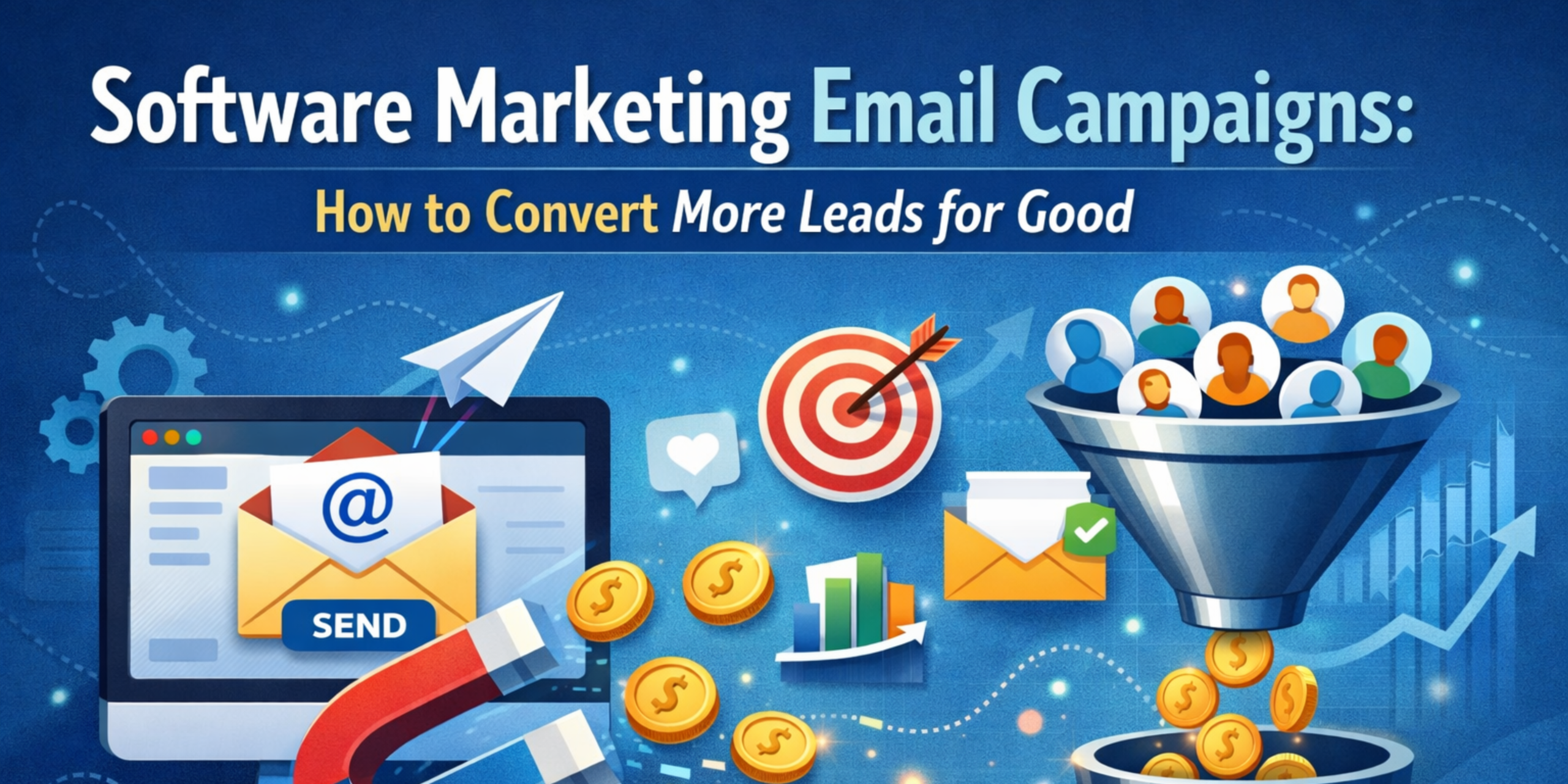
Software Marketing Email Campaigns: How to Convert More Leads for Good
How to Choose the Best Email Marketing Software (Step-by-Step Framework)
Step 1: Define Your Business Model
Are you ecommerce, SaaS, coaching, affiliate marketing, or service-based?
Different models require different automation depth.
Step 2: Estimate List Growth
Choose a pricing model that scales sustainably.
Step 3: Map Required Automations
List:
- Welcome series
- Lead magnet delivery
- Cart recovery
- Upsell sequences
Step 4: Test User Interface
Most platforms offer free trials. Ease of workflow matters more than feature quantity.
Step 5: Evaluate Total Marketing Ecosystem
If you need landing pages, funnels, and course hosting, an all-in-one system may reduce tech stack costs.
Benefits of Using the Right Platform
- Higher engagement rates
- Increased customer lifetime value
- Automated lead nurturing
- Scalable growth without hiring
- Better audience insights
Common Mistakes When Choosing Email Software
- Selecting based on brand popularity alone
- Ignoring automation depth
- Overpaying for unused features
- Underestimating deliverability importance
- Not planning long-term scalability
Challenges and Limitations
Even the best email marketing software has trade-offs:
- Pricing scales with list size
- Learning curve for automation systems
- Deliverability depends on sender practices
- Over-automation can reduce personalization
Understanding these limitations helps set realistic expectations.
Future Trends in Email Marketing Software
- AI-powered subject line optimization
- Predictive segmentation
- Behavioral analytics
- Omnichannel automation (email + SMS + push)
- Privacy-first data collection
Startups adopting automation-first systems gain competitive advantage in customer retention.
What Is the Best Email Marketing Software for Small Businesses?
The best email marketing software depends on business needs. Beginners may prefer Mailchimp for simplicity, while automation-focused startups benefit from ActiveCampaign. Budget-conscious entrepreneurs often choose Systeme.io for integrated funnels and email in one platform.
Choosing the Right Platform for Sustainable Growth
Selecting the best email marketing software is a strategic decision that impacts lead generation, customer retention, and revenue growth. Small businesses and startups should prioritize automation depth, scalability, integration capabilities, and cost efficiency over brand popularity.
Start by mapping your growth plan, test 1–2 platforms, and build automation early. The right system becomes a long-term marketing asset.
If you want a deeper breakdown of automation workflows and funnel integration strategies, explore our related guides or subscribe to our marketing insights newsletter for practical growth frameworks.
Frequently Asked Questions (FAQs)
1. What is the best email marketing software for beginners?
Mailchimp is often recommended due to its intuitive interface and guided campaign setup.
2. Which email platform has the best automation features?
ActiveCampaign offers advanced workflow automation, behavioral triggers, and integrated CRM tools.
3. Is free email marketing software worth using?
Free plans work for testing and small lists but usually limit automation and analytics.
4. How much does email marketing software cost?
Costs vary depending on list size and features. Entry-level plans are affordable, but pricing increases as contacts grow.
5. What features should small businesses prioritize?
Automation workflows, segmentation, deliverability tools, analytics, and integration capabilities.
6. Can email marketing software replace CRM?
Some platforms include CRM features, but advanced sales teams may still require dedicated CRM systems.
7. How important is email deliverability?
Critical. Even well-designed campaigns fail if emails land in spam folders.
8. Is all-in-one marketing software better than standalone email tools?
It depends on operational complexity. All-in-one systems reduce tech stack costs, while specialized tools may offer deeper features.